In this article
Mornings rarely leave room for a quiet chapter of philosophy before the day starts pulling at your attention. Most of us pick up our phone, glance at unread messages or overnight notifications, and spend the next hour reacting to other people’s priorities. When I tried keeping a long morning notebook, it lasted four days before work got in the way.
That friction is the main reason I shaped my own routine—and built Daily Quotes: Stoic Reflection—around something much smaller. Instead of aiming for twenty minutes of writing, I give myself three or four minutes with a single passage, write one honest line, and carry that thought into whatever comes next.
Before the inbox opens
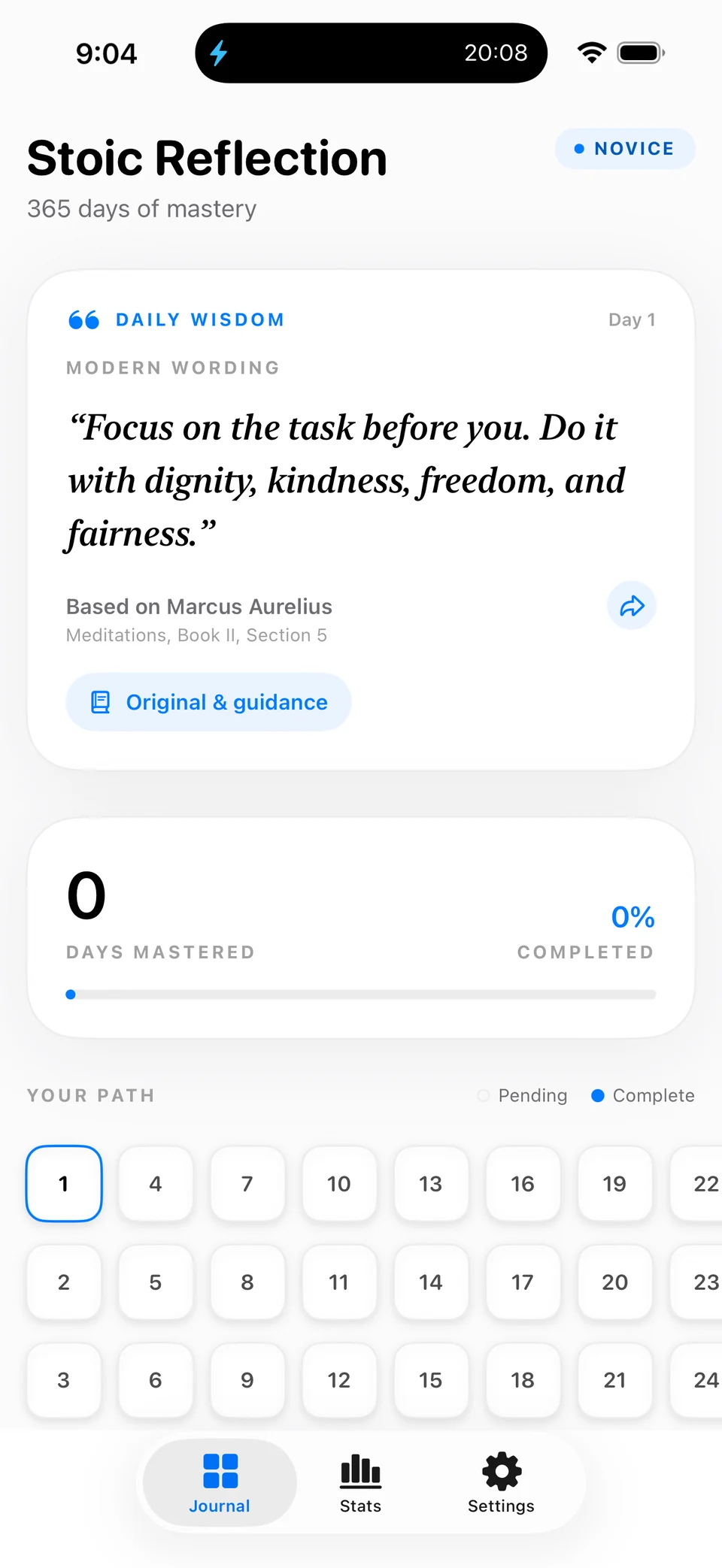
My rule is simple: I open Daily Quotes before I open email or chat. The app holds 365 daily passages drawn from Marcus Aurelius, Seneca, and Epictetus, and having just one card waiting for me removes the temptation to browse or hunt for something clever to read.
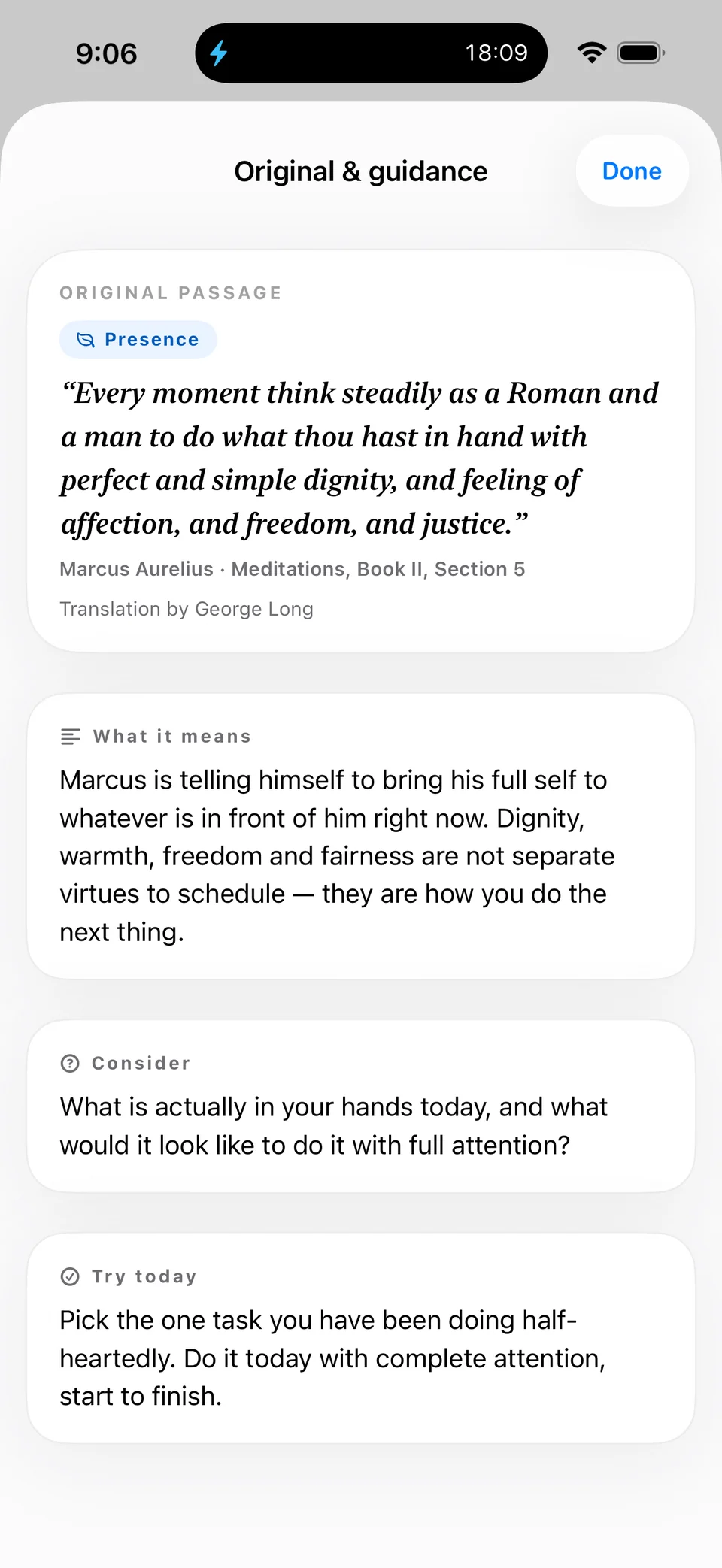
Depending on the light in the room, I leave it in light or dark appearance and read the modern wording slowly once through. Because that modern text is an AI-assisted editorial adaptation of existing English passages rather than a fresh translation from Greek or Latin, I like tapping Original & guidance right underneath when a sentence catches my attention. That opens the original quotation, its historical source, a short note on meaning, a reflection question, and a suggested practice.
Checking the source takes ten seconds, and it keeps the routine honest. If you ever want to quote a line elsewhere, it is worth knowing whether you are reading the historical wording or the modern adaptation, a distinction I wrote more about in comparing original Stoic quotes with modern adaptations.
One line instead of a long journal entry
The biggest mistake I used to make with morning journaling was treating an empty text box like an essay prompt. On a busy Tuesday, staring at a blank page feels like homework, so you close the app and promise yourself you will catch up at the weekend.
In my own routine, I deliberately limit the reflection to one line—two at most. The goal is not to summarise my life, just to connect the passage to one real thing sitting on my calendar that morning. An illustrative note might look like this: “I have a difficult code review at ten; I can prepare my reasons clearly, and I do not need to rush my reply if the feedback is blunt.”
Writing it takes less than a minute, and because the journal is stored privately on the device with no account required, I never feel as though I am writing for an audience. One practical caveat I always keep in mind as a developer: local storage lives with the app on your iPhone or iPad, so if there is an entry you genuinely want to keep long-term, back it up separately before changing devices or deleting the app.
Carrying the line past breakfast
Once I lock the phone, I do not try to memorise the whole passage or force a dramatic shift in mood. A single quote will not make a delayed train arrive on time or turn an awkward meeting into an easy one. What it can do is give you a small pause you already recognise when friction shows up before lunch.
On days when a passage feels especially relevant to what I am working on, I occasionally save it as a quote card or a Lock Screen wallpaper so I catch sight of it again when checking the time. If my morning schedule shifts—say, an early errand pushes breakfast back—an optional daily reminder nudges me later so the habit does not quietly vanish for the week.
I also like pairing a short morning line with a quick check-in at night, without turning either into a strict chore. If you miss a day, nothing breaks; the next morning is simply another single passage. When I want to review how a day actually played out against what I wrote at breakfast, I follow the approach in my evening reflection routine.
Access limits and what stays free
I built Daily Quotes so the core morning routine works without paying upfront. Daily passages, Original & guidance, written reflections, completed-day progress, streak tracking, achievement badges, and daily reminders remain free with ads, and optional rewarded ads can unlock selected extra actions.
Eligible users can also try Pro free for seven days with no subscription, renewal, or automatic charge. An optional one-time lifetime purchase removes ads and unlocks reflection history, full-path navigation, extra themes, fonts and colours, scenic sharing backgrounds, illustrated author portraits, your own photo backgrounds, animated sharing, and Home Screen widgets—free users see a locked widget, and Pro browsing features lock again after the trial while your saved reflections stay on your device.
If a smaller morning habit sounds more realistic than a full notebook, you can read the full feature list and current access details on the app page.