In this article
A sentence can express a Stoic idea clearly without being the exact sentence an ancient author wrote. Before I share a passage, I want to know whether I am sharing a quotation, an adaptation, or my own interpretation.
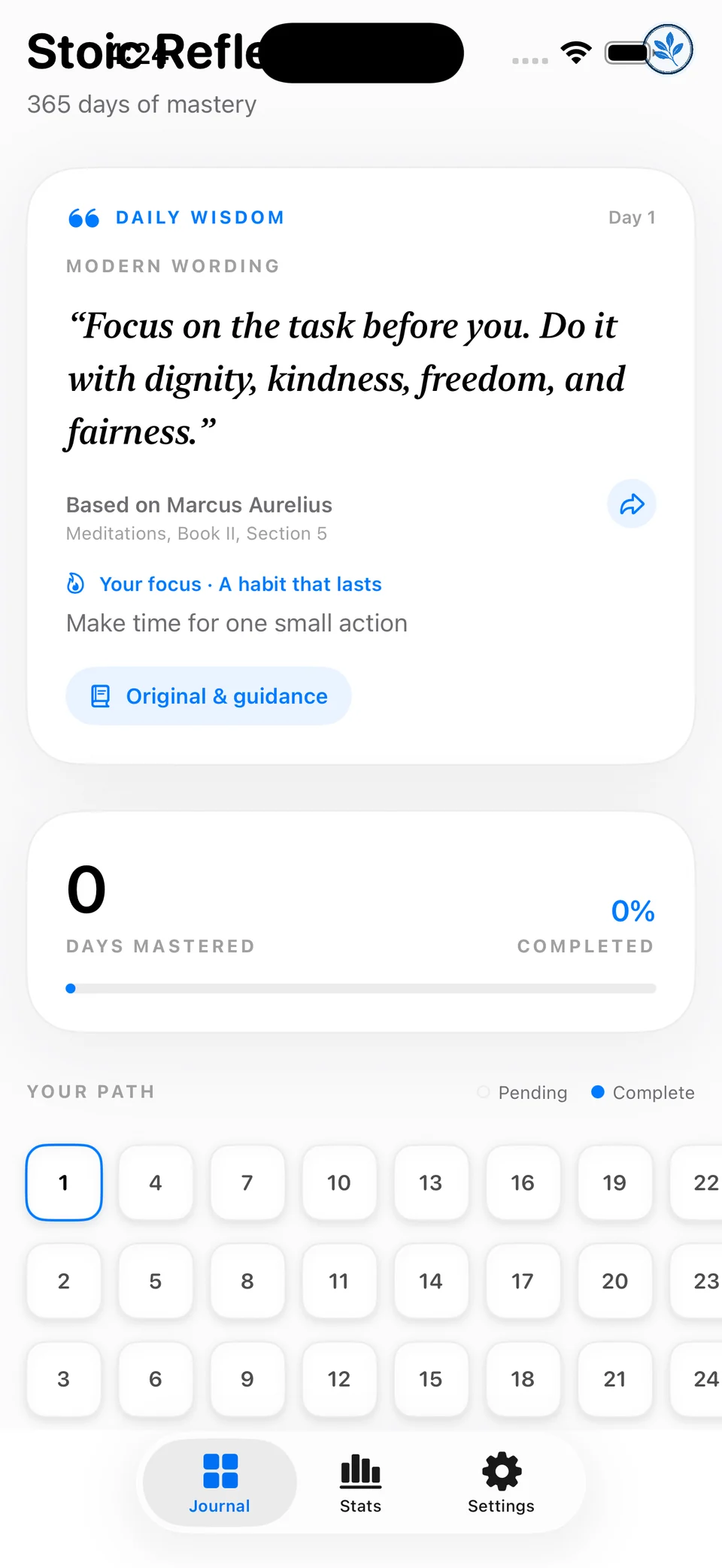
Daily Quotes places modern wording alongside Original & guidance. The modern text is an AI-assisted editorial adaptation of existing English passages, not a new translation from Greek or Latin.
Read the attribution before copying
Open the passage and look at the author and source information. Then open Original & guidance to inspect the original quotation, source, explanation, reflection question, and suggested practice.
I would compare the two texts before deciding which one to copy. An easier modern sentence may be useful for reflection, but placing quotation marks around it and attributing it verbatim to Marcus Aurelius would hide the editorial step.
Keep three kinds of writing distinct
- Source quotation: copy the exact passage and preserve the source details shown. For formal writing, consult the relevant edition and translation.
- Modern adaptation: identify it as wording based on the author’s passage, rather than an exact ancient quotation.
- Your reflection: write in your own voice and make clear that the example or interpretation is yours.
For instance, “I will reread the message before replying” is an original practice example. It does not become a quote from Seneca just because it follows a reading about restraint.
Inspect the exported card
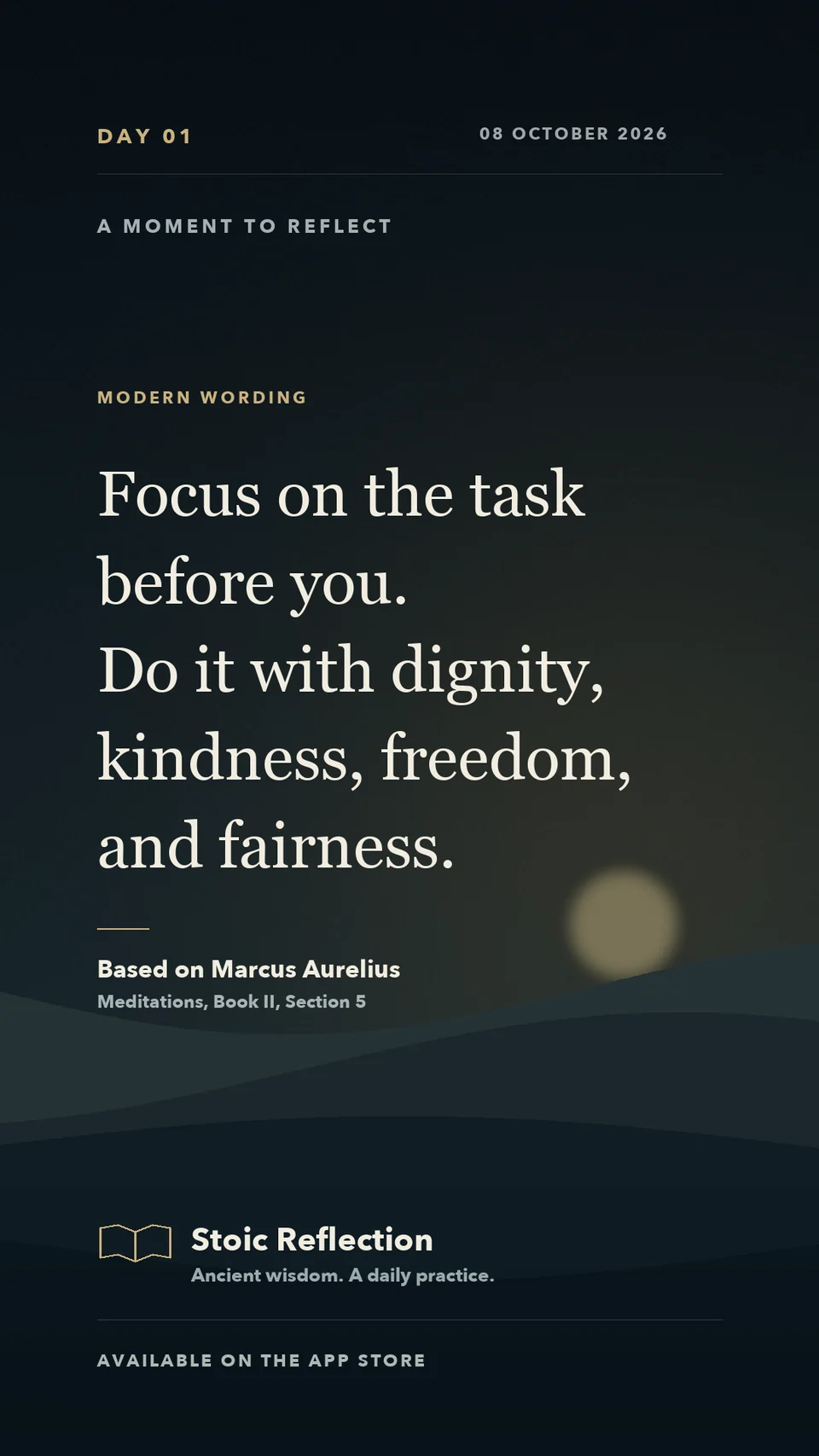
After creating a card, open the saved image. Make sure the attribution remains readable and has not been cropped away by a social app’s preview. If the card is placed into a new design, carry its context with it.
For an essay or publication, an app card is a starting reference. Verify the exact text, translator, and work in the edition you plan to cite.
Let the reading lead somewhere concrete
Once the wording is clear, choose one action or write a short response. Source checking and personal reflection can sit together without making every sentence sound ancient.
Daily reading and guidance are available free with ads. Pro adds appearance and sharing options, reflection history, full-path access, and Home Screen widgets. Eligible users can try Pro for seven days with no subscription or automatic charge.
For the reflection itself, try the five-minute routine. For the visual presentation, see cards and wallpapers.