In this article
Vocabulary practice is one part of preparing for an English exam. VocabZ can help you revisit words, but its quizzes and progress numbers do not establish an IELTS band or TOEFL score.
I would pair a small vocabulary session with official practice for the particular exam, including its listening, speaking, reading, and writing tasks.
Choose useful words in context
Pick a level that gives you a manageable mix of known and unfamiliar material. CEFR is a proficiency framework, not a single universal official list assigning every English word one fixed level.
Study the meaning that fits a sentence. A familiar word can have a different sense in an academic passage, and a formal synonym is not automatically a better choice in your writing.
Use quizzes for recognition practice
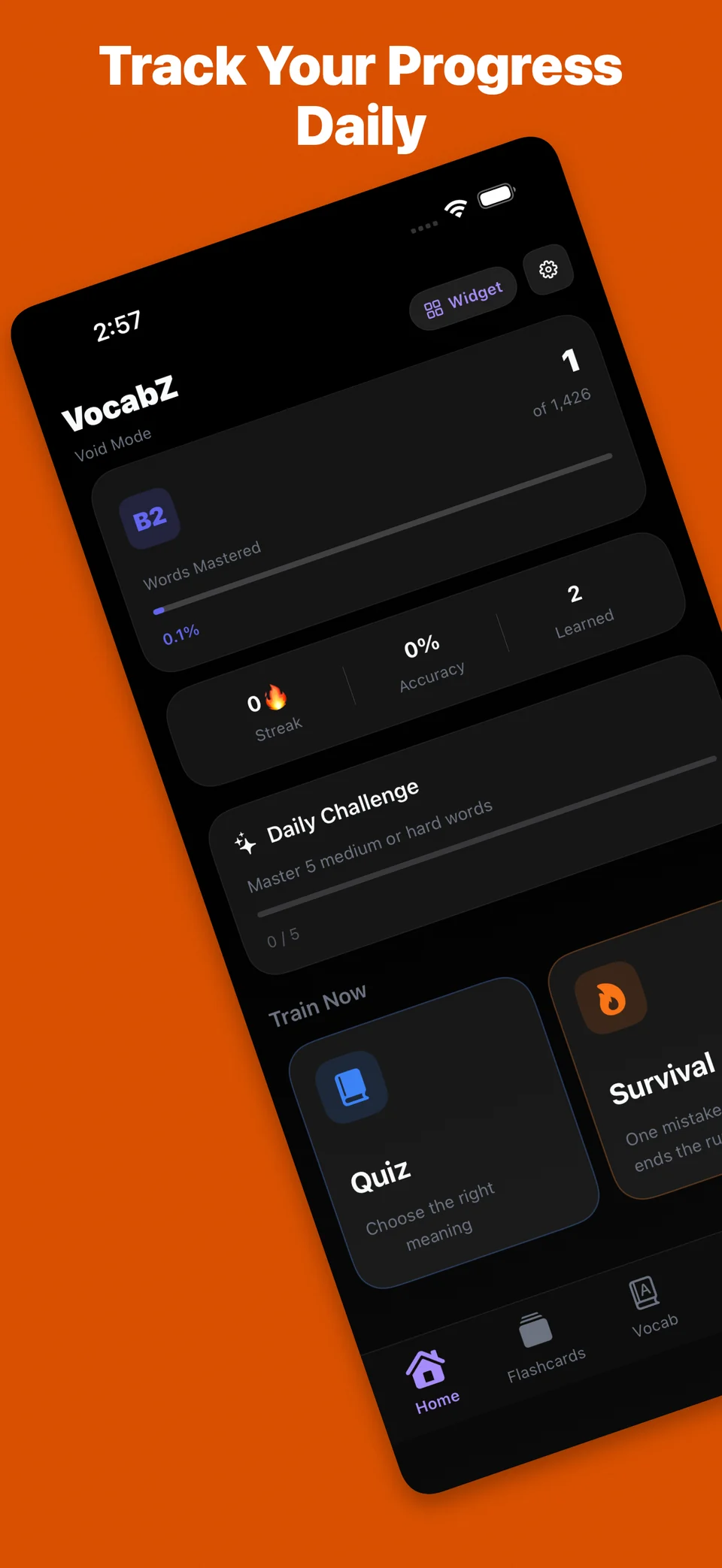
Quiz offers four choices with a ten-second timer; Survival ends after a wrong answer. Use the result to identify words worth reviewing. Neither mode is a test of every skill needed in an exam.
After the quiz, produce an answer without choices: explain the word, use it in a new sentence, and check its register and word combinations.
Practise listening separately
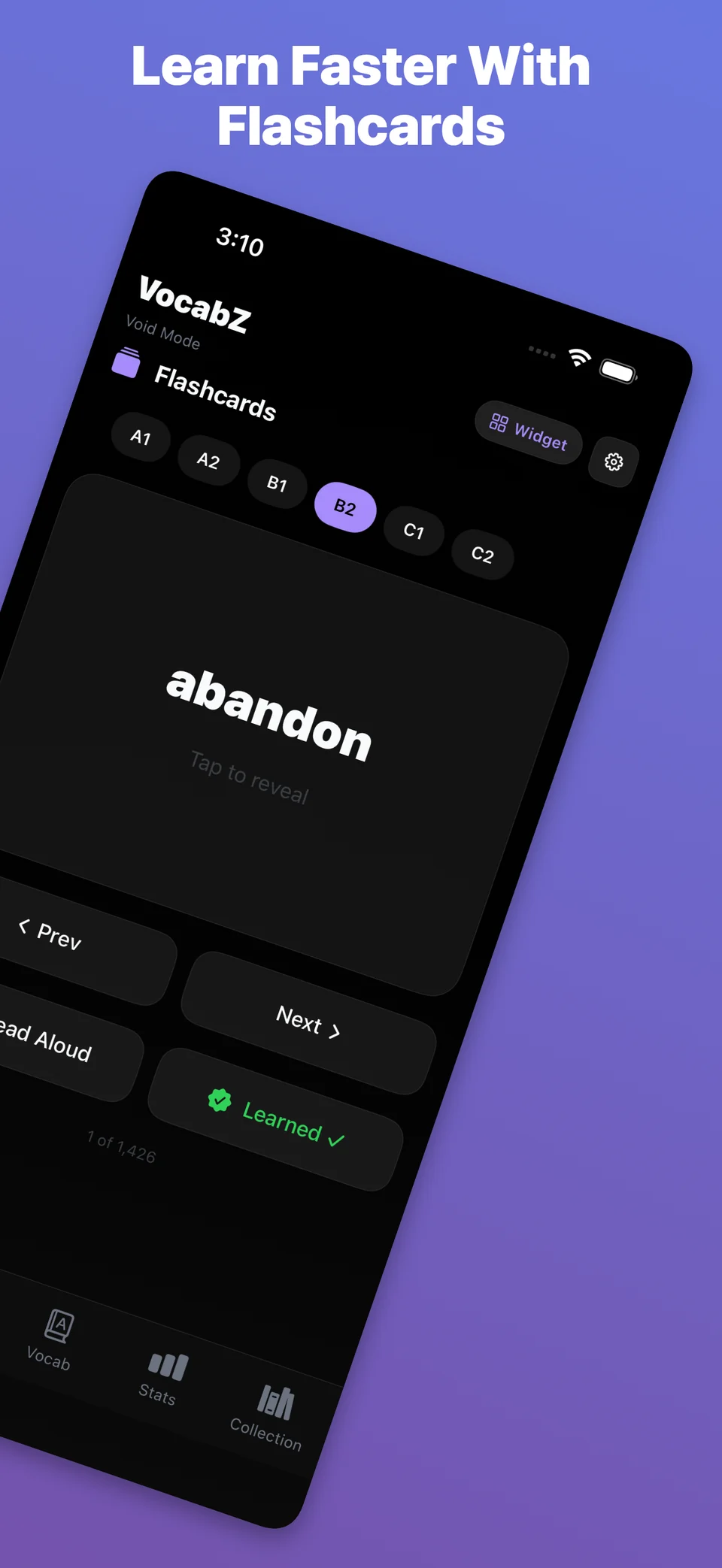
Read Aloud uses your selected available voice. Listening to a word can help you inspect pronunciation; it is not a substitute for understanding connected speech in an exam recording.
Measure the right outcome
App accuracy, streaks, and per-level counts describe app activity. Use official exam practice and scoring guidance to evaluate readiness, and do not infer a guaranteed score from a mastered-word count.
VocabZ is free to start with ads and has optional lifetime Pro. Check the released app’s current access screen for the level or action you want.
See contextual B1–C1 examples for original practice sentences.