In this article
A new word is more useful when you know what you could say with it. I build VocabZ around definitions, examples, and review, but I would still encourage a learner to write a sentence of their own.
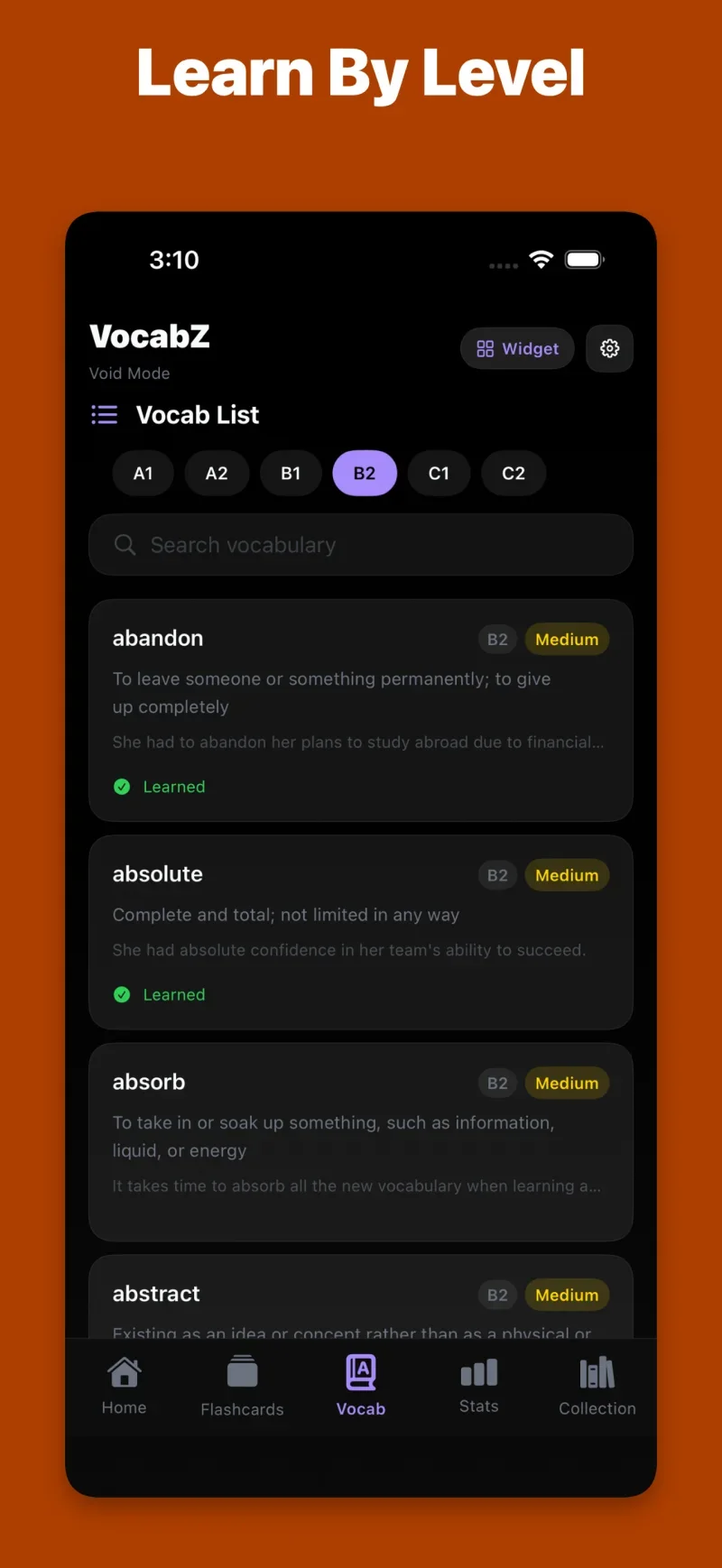
This guide uses practical examples at increasing levels of complexity. The groups are study suggestions, not certified CEFR labels for each word.
Use CEFR as a guide to what you can do
The Council of Europe describes CEFR as six proficiency levels, from A1 to C2, defined through what learners can do. It is not one universal list assigning every English word a fixed difficulty.
B1, B2, and C1 can help organise study, but meaning, context, and the task matter. Knowing an advanced-looking word does not by itself establish a proficiency level.
Start with everyday situations
For a B1-oriented practice session, I would choose useful situations and short sentences:
- Arrange: organise something. “Can we arrange a meeting for Friday?” Try: arrange a visit, arrange transport.
- Improve: make something better. “I want to improve my pronunciation.” Try: improve a skill, improve a service.
- Reliable: able to be depended on. “We need a reliable internet connection.” Try: a reliable source, a reliable colleague.
Replace part of each sentence with something from your own day. A sentence you can imagine saying is easier to put into practise than an isolated definition.
Add explanation and comparison
For B2-oriented practice, use vocabulary to explain a choice or connect ideas:
- Trade-off: a balance between competing benefits. “There is a trade-off between image quality and file size.”
- Consistent: following a similar pattern or standard. “Her reports use a consistent structure.”
- Distinguish: recognise or explain a difference. “It is important to distinguish a suggestion from a requirement.”
Try following an example with “because” or “however.” That turns recognition into a small writing task.
Practise precision without making every sentence formal
For C1-oriented practice, focus on meaning and register:
- Corroborate: provide supporting evidence. “The second interview corroborated her account.”
- Ambiguous: open to more than one interpretation. “The instruction was ambiguous, so we asked for clarification.”
- Feasible: possible to carry out. “The proposal is feasible within the current budget.”
Ask whether the word adds precision. “Confirm” or “possible” may be the better choice in another sentence. More formal vocabulary is not automatically better writing.
Turn the examples into a review session
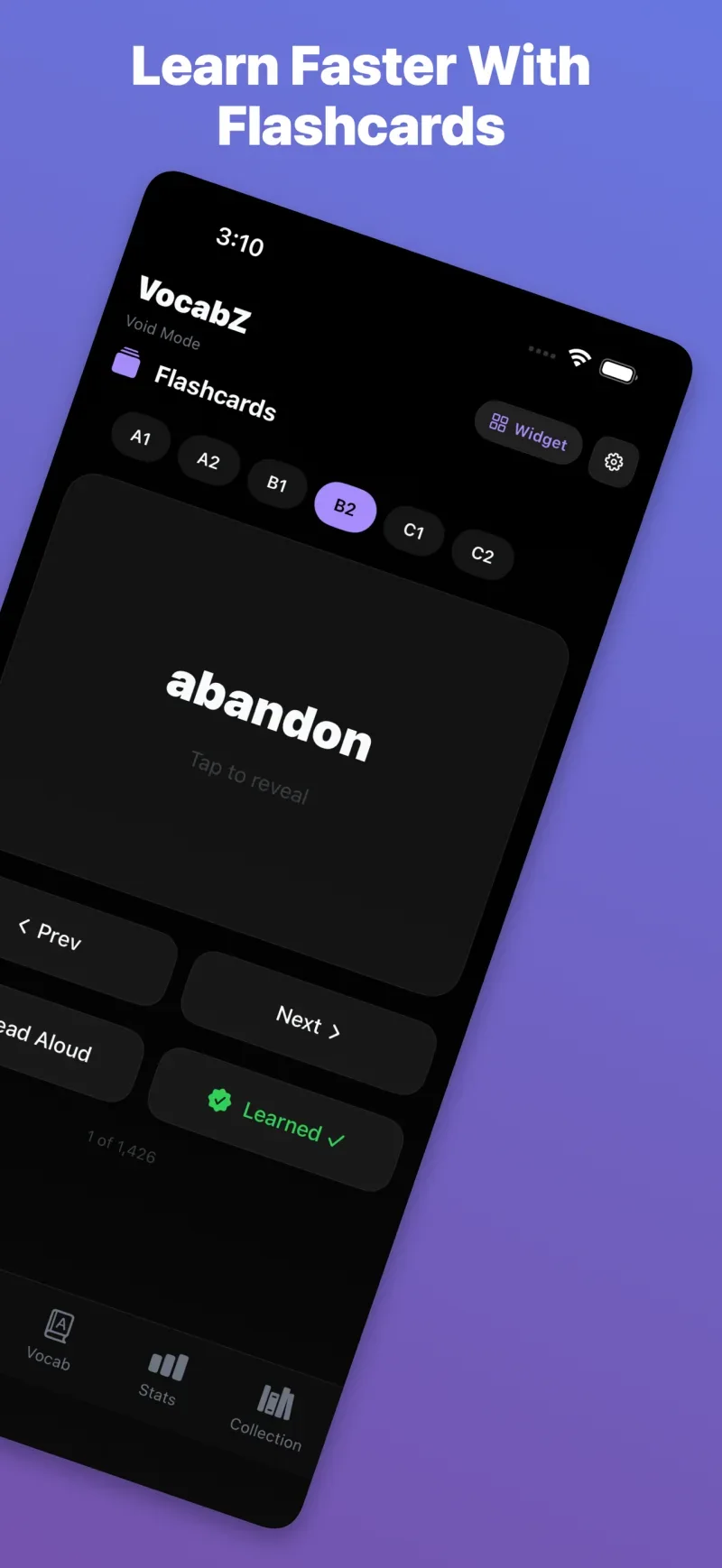
- Choose five useful words rather than a long list.
- Read the definition and example, then listen with Read Aloud if useful.
- Hide the definition and try to recall the meaning.
- Write one original sentence for each word.
- Return to the review queue and revisit difficult words.
VocabZ includes flashcards, review scheduling, quizzes, a personal collection, and progress views. App progress is a study record, not an official CEFR assessment or a promised exam score.
Explore VocabZ. If a short study interval would help you begin, my Focuso setup guide offers a simple way to structure it.