In this article
Ten minutes is enough for a useful vocabulary session if you decide what those minutes are for. I would rather work with a few words carefully than rush through a long list and recognise none of them tomorrow.
Release checked: VocabZ 2.0, 16 November 2026. Use the installed access screen for the offer available to your account.
Here is a small routine to try with VocabZ. The time boxes are a structure for the session, not a promise about how quickly you will learn.
Minutes 0–2: return to words you have already met
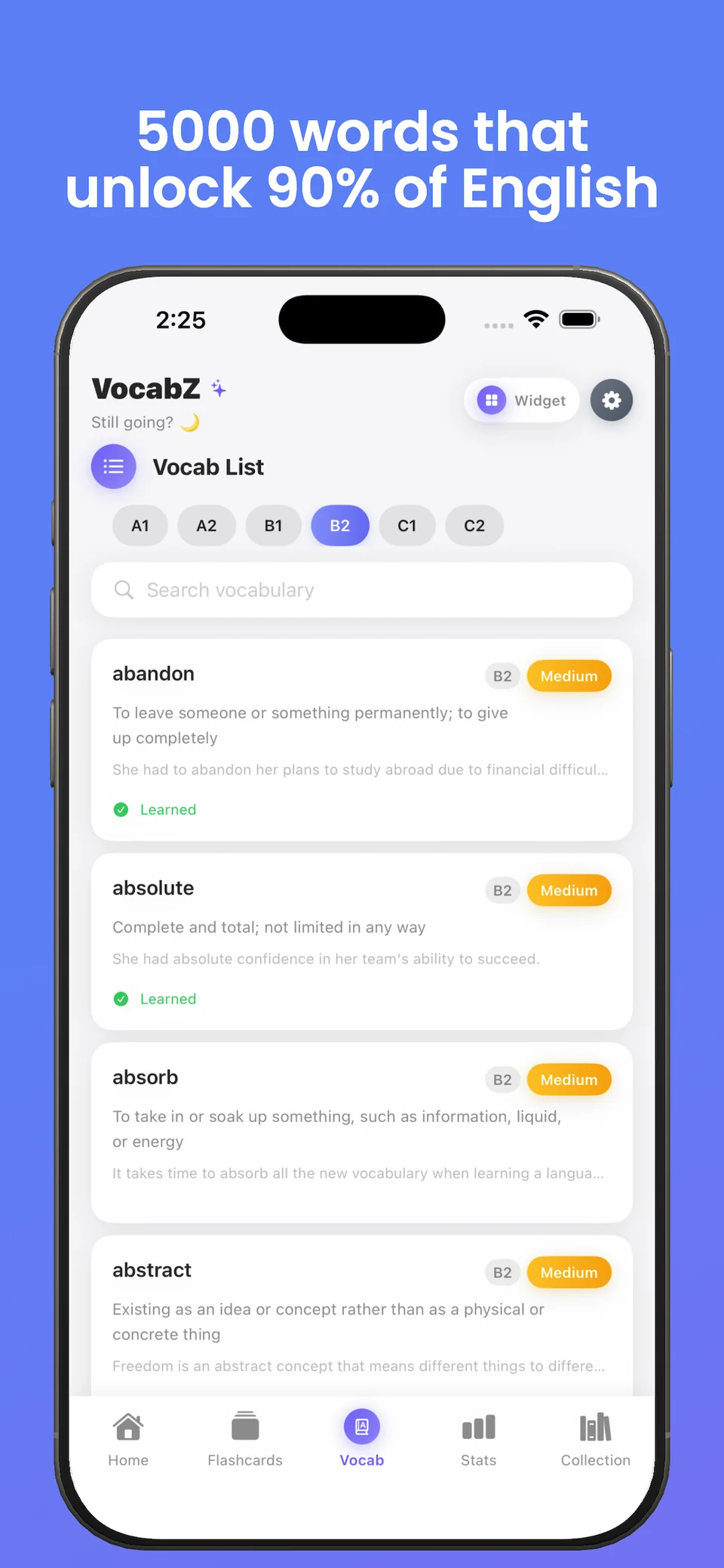
Open Flashcards and start with words ready for another attempt. Before revealing an answer, try to recall the meaning or use the word in a short phrase.
If a word feels familiar only after you see its definition, that is different from recalling it independently. Give yourself an honest answer so your next review has a useful starting point.
Minutes 2–5: add a little new material
Choose a small number of useful words. Read the definition and example, and notice the part of speech. A verb and a noun with the same spelling may need different sentences.
Use Read Aloud if you want to hear the word. Then say a phrase or sentence yourself. The aim is to connect spelling, meaning, sound, and a situation where you might use it.
I would start with two or three new words if the session already contains difficult reviews. More new material is not automatically a better session.
Minutes 5–8: retrieve, do not just reread
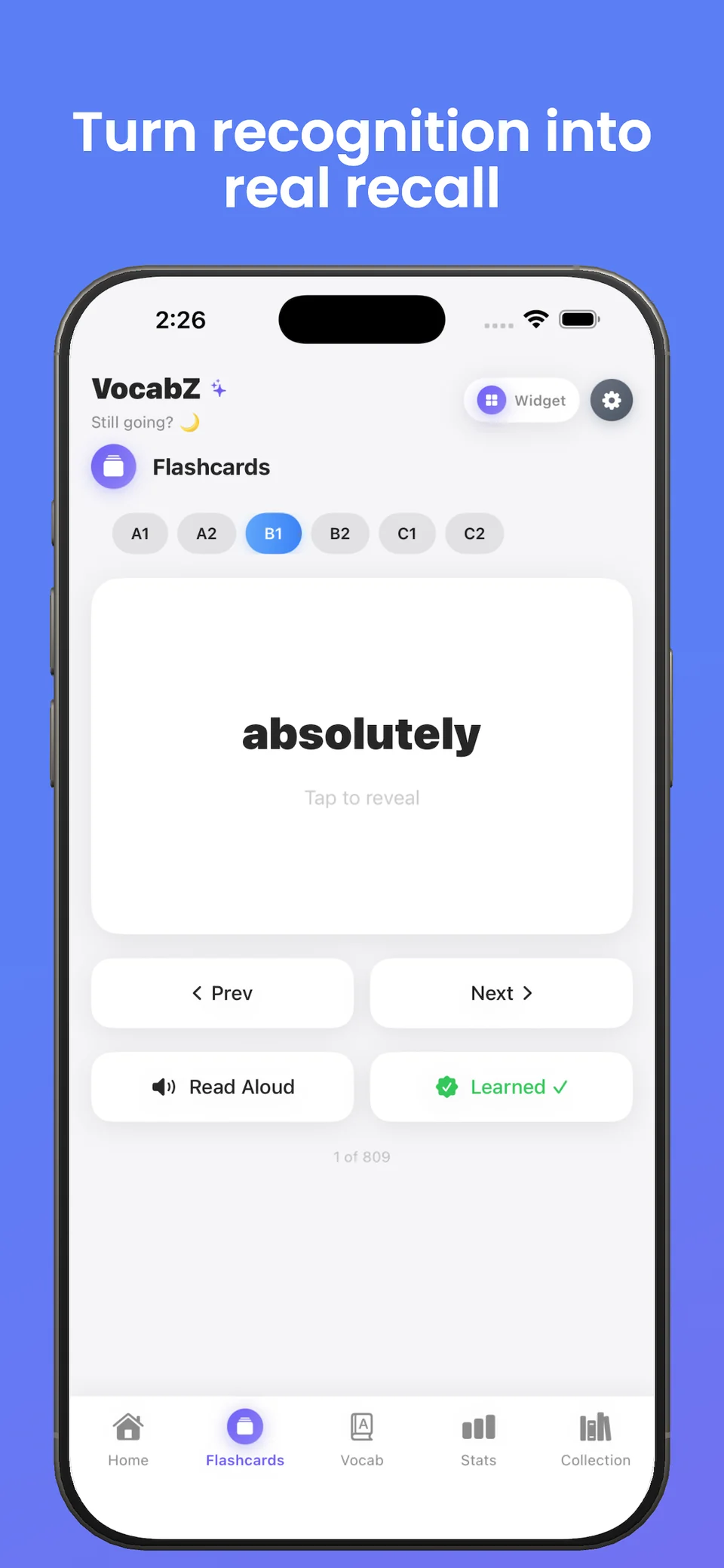
Look away from the definition and explain the meaning. On a flashcard, make an attempt before turning it over. If you use a quiz, explain why the chosen answer fits rather than tapping until the app accepts something.
A useful mistake is specific. “I confused reliable with responsible” tells you what to compare next. “I am bad at vocabulary” does not identify a practice task.
Minutes 8–10: write one sentence you might actually say
Choose a word from the session and make it personal without making the sentence complicated. For reliable, you might write: “I need a reliable way to back up these files.” Then change the noun: a reliable source, a reliable colleague, a reliable connection.
Check the grammar around the word. Does it need a preposition? Is it countable? Does it sound natural in a casual message, or does it belong in formal writing? A dictionary or teacher can help with a usage you are unsure about.
Finish with a small next step
Leave one note about a difficult word or a situation where you want to use it. Then stop. A finite session is easier to repeat than a rule that you must keep going until every unfamiliar word feels easy.
On a busy day, use a minimum version: review one word, recall its meaning, and say one sentence. Resume the fuller routine when you have the time.
What to measure
Look for words you can understand and use after a gap, not only a high score immediately after reading them. App progress is a study record; it is not an official CEFR assessment or an exam result.
VocabZ 2.0 is free to download with ads and an optional one-time VocabZ Pro purchase to remove ads and unlock features. Its released description does not establish a numerical free allowance for each action. Check the installed access screen and keep the routine within that allowance; this guide does not apply unreleased interface limits or promise an exam result.
Continue with saving words from your own reading and listening, or use my contextual vocabulary examples for sentence practice.
Finish with a small piece of work you can revisit
Here is an original worked example for reliable, rather than a sentence attributed to VocabZ or a reported learning result:
- Meaning in my own words: something or someone I can depend on.
- Sentence: “I need a reliable way to back up these files.”
- Another setting: a reliable source for a claim in an essay.
- Next check: explain the word again later without looking at this note.
Your result can be one sentence and one precise point to revisit. A correct multiple-choice answer or an immediate sense of familiarity is a different check from producing an explanation after a gap. If the app’s access limit interrupts the session, finish the sentence in your own notes and adjust the next session to the access actually available.
See VocabZ app details and current access information before your next session.