In this article
The first week after moving abroad throws unfamiliar vocabulary at you from every direction: tenancy agreements, bank forms, station announcements, and supermarket labels. Trying to study hundreds of general textbook words at night rarely helps when you are standing at a post office counter the next morning.
When I built VocabZ, I included My Collection so you can keep a personal dictionary alongside the built-in CEFR word lists. For your first month in a new country, I would aim for just thirty practical words—roughly one a day—organised around the situations you actually face first.
Days 1–7: Housing, registration, and bank counters
Your first week is usually dominated by paperwork and appointments. Before you worry about idiomatic conversation, focus on eight words that keep recurring on forms, emails, and reception desks.
In My Collection, create a broad category such as Admin and Housing rather than separate folders for your landlord, your bank, and the local council. Broad categories stay easy to scan when you are standing in a queue. For each entry, add the word, a plain definition in your own words, and a short example sentence tied to what you actually need to do—for instance, asking whether a utility bill counts as proof of address.
Keep the optional fields light during week one. You can fill in the part of speech, synonym, or antonym later if a word keeps tripping you up, but speed matters more than a complete dictionary card while you are unpacking.
| Week | Focus area | Target | Example category in My Collection |
|---|---|---|---|
| Days 1–7 | Tenancy, forms, banking, local registration | 8 words | Admin and Housing |
| Days 8–14 | Groceries, public transport, pharmacy, errands | 7 words | Daily Errands |
| Days 15–21 | Workplace or study phrases, polite clarifications | 8 words | Work and Conversation |
| Days 22–30 | Review, prune duplicates, test active recall | 7 words (or consolidation) | All categories |
Days 8–14: Supermarkets, transit, and pharmacy runs
Once the urgent paperwork settles down, friction shifts to everyday errands: reading food labels, buying the right travel pass, or explaining a minor symptom to a pharmacist. Add around seven words this week under a category like Daily Errands.
I prefer choosing words that unlock a whole category of situations rather than hyper-specific nouns you will use once a year. Terms for expiry dates, ingredients, return policies, or ticket zones pay off repeatedly. If you hear a word on a bus or see it on a shop sign, jot it down in your notes and add it to VocabZ when you sit down with a cup of tea.
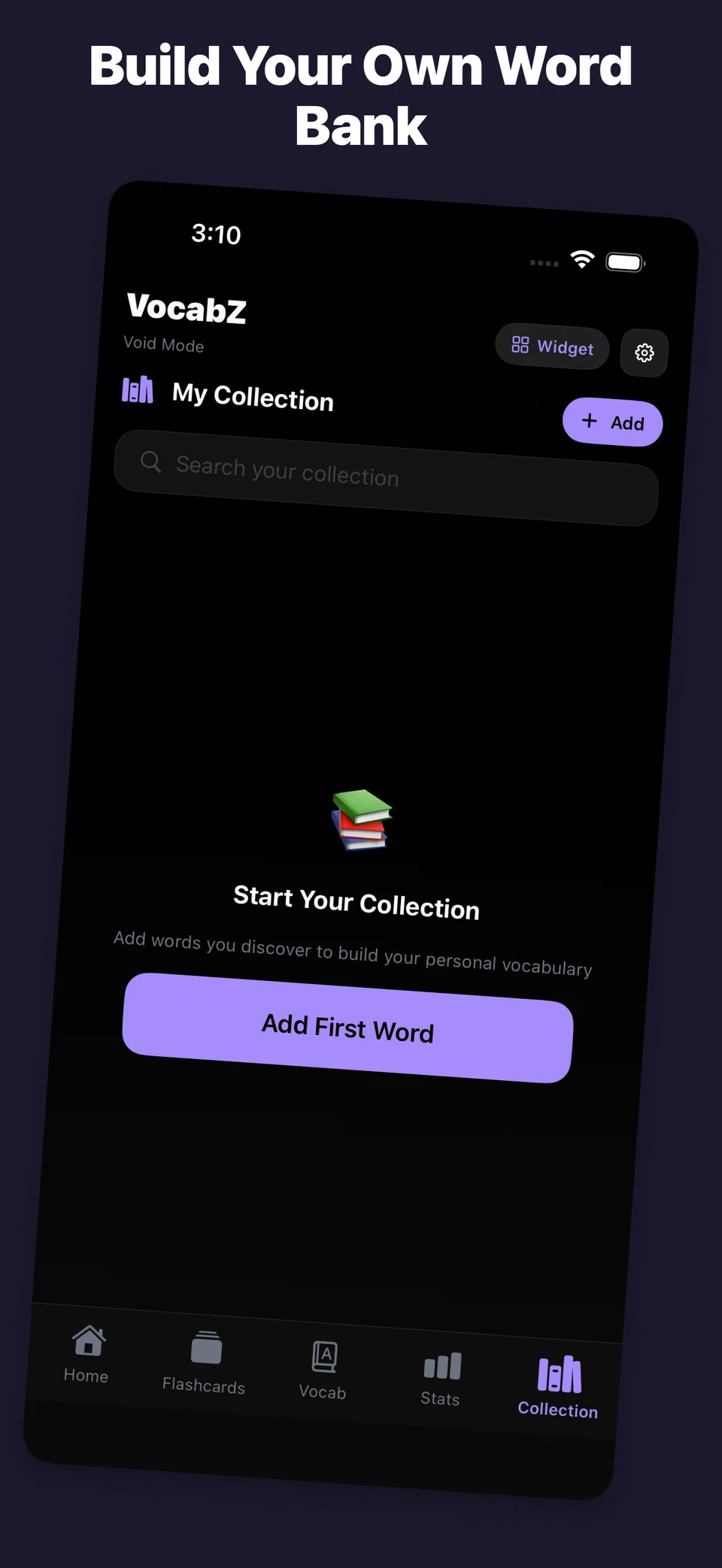
Before creating a new entry, check whether the word is already in the built-in Vocab List (which spans CEFR levels A1 to C2). If it is already there with a clear definition, you do not need to type it out from scratch unless you want a personal example sentence tied to your new neighbourhood.
Days 15–21: Work, study, and polite small talk
By week three, you are usually past the initial survival errands and spending more time with colleagues, classmates, or neighbours. Set aside eight slots for phrases that help you follow meetings, ask someone to repeat a detail politely, or handle casual small talk without freezing.
Written spelling only gets you halfway in a new city, especially if local speakers use an accent you are not used to hearing. Open a card in Flashcards and tap Read Aloud to hear how a word sounds across the available English voices (British, American, Australian, Indian, and others). For a closer look at comparing voices without muddling your study session, see how to use Read Aloud accents as a listening reference.
Pair each spoken check with one realistic sentence you expect to say out loud that week. A word you have rehearsed in a short phrase is much easier to reach for in person than a word you have only read silently on a screen.
Days 22–30: Review, prune, and test recall
In the final stretch of the month, resist the urge to keep stuffing new entries into My Collection. Aim for at most seven more words, or spend days 25 to 30 consolidating what you have already collected. Thirty words you can actually recall under mild pressure are worth far more than ninety half-read bookmarks.
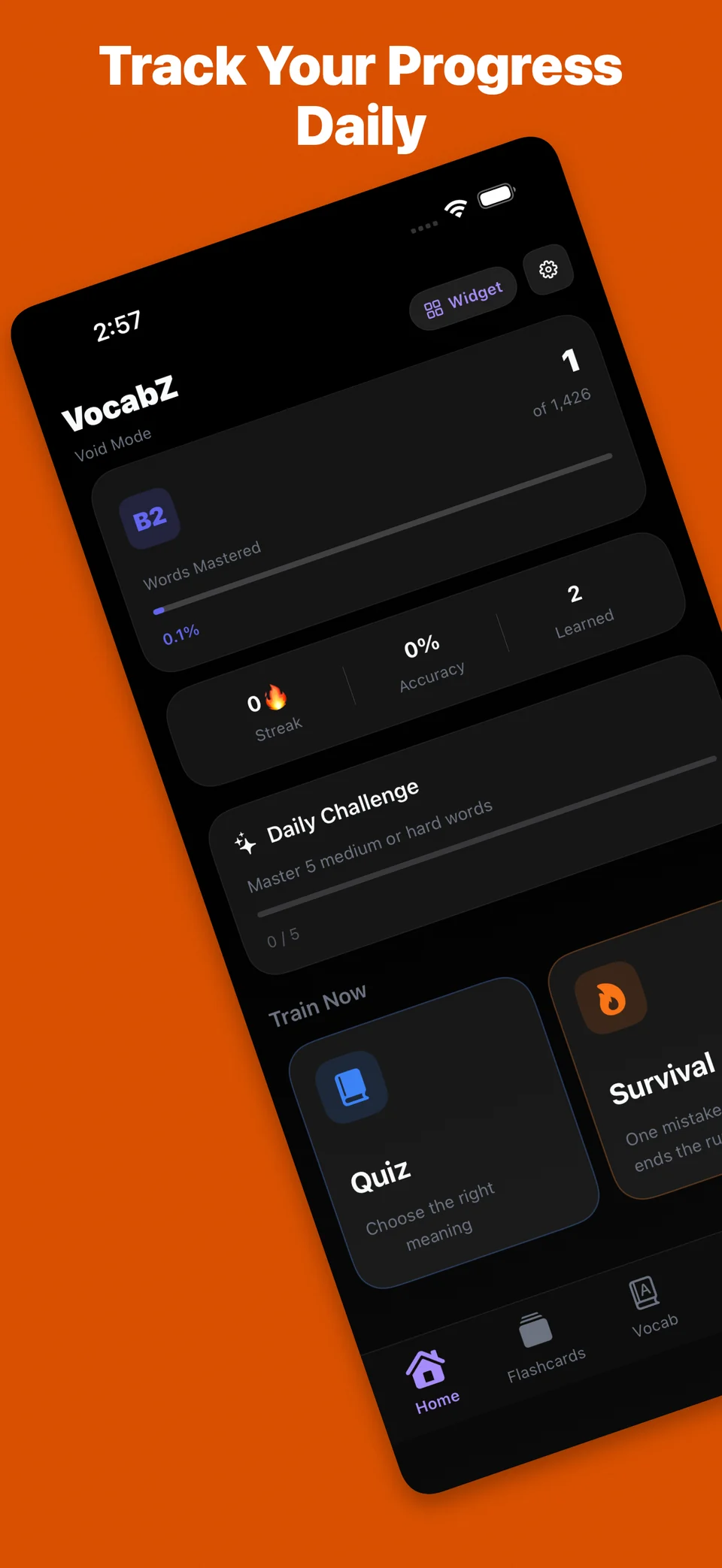
Start with Flashcards so you can attempt the meaning before flipping the card. Once a batch feels steady, switch to Quiz Mode (four choices on a 10-second timer) or Survival Mode (where one wrong answer ends the streak) to see which words still make you hesitate. VocabZ’s spaced repetition schedule brings words back at 3, 7, 14, and 30 days as you answer them correctly, while missed words return sooner; you can read more about how that timing works in the spaced repetition intervals guide.
If you spot duplicate entries or words you never actually needed after week one, edit or remove them. Keeping your personal list lean makes next month’s thirty words much easier to manage.
Access limits and where to start
VocabZ 2.0 is a free download with ads, and an optional one-time VocabZ Pro purchase removes ads and unlocks every feature. The released listing does not publish fixed numeric caps for every free action or level, so check the in-app access screen on your device if you plan to rely heavily on custom entries or specific modes.
If you are settling into a new city this month, start small: pick one word from today’s errands, write a plain definition, and test yourself tomorrow. You can read full feature details and find the App Store link on the VocabZ app page.