In this article
A weekly focus chart is most useful when it helps you decide what to do next. I would use it to make a small, realistic plan, rather than turn last week’s total into a score you have to beat.
Focuso’s Pro statistics and history give you a record of sessions. Combine that record with your calendar and what the work actually produced.
Review what happened before planning more
Open the statistics or history view and look at the week you have just completed. Check the days with activity and the days without it. If you used task labels, look at how the time was distributed.
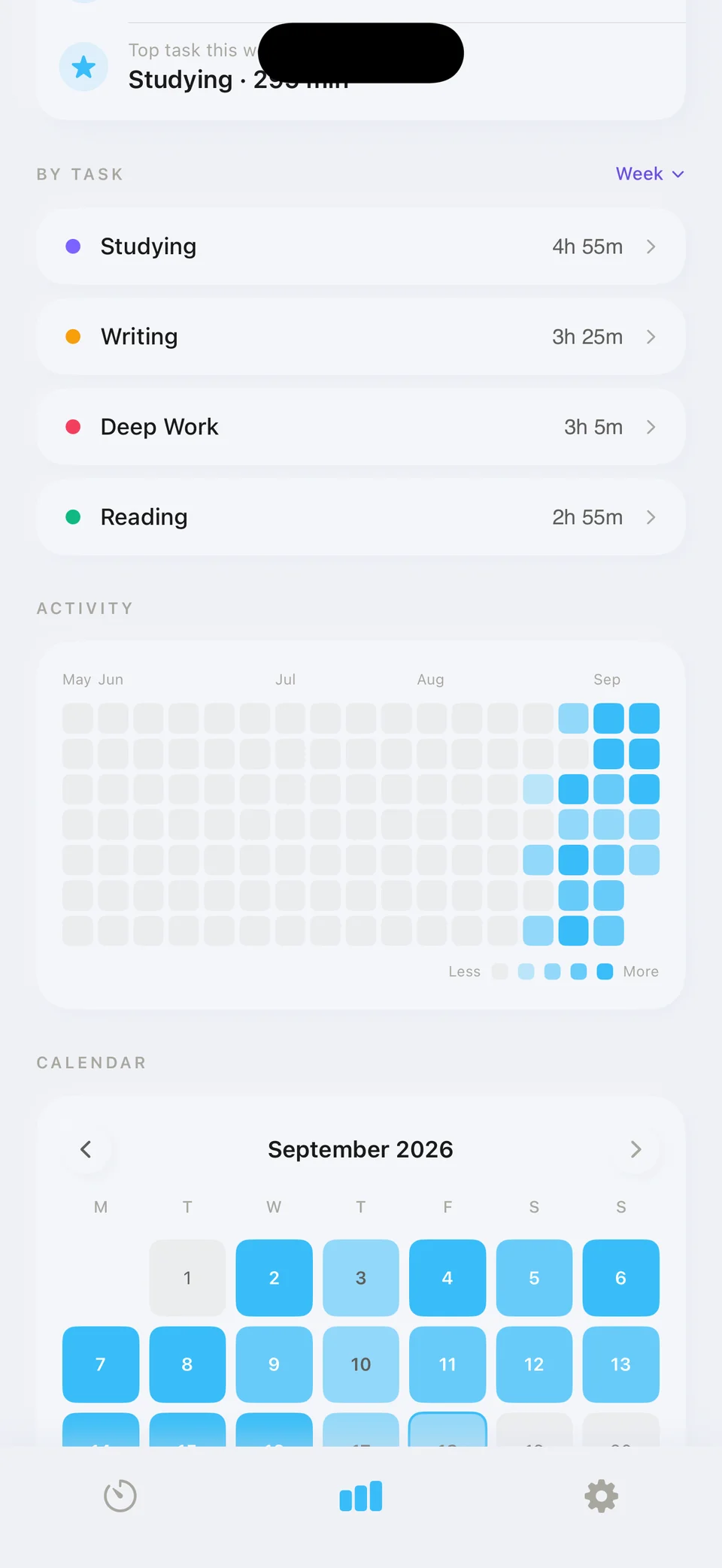
A blank day can mean many things: a day off, work done without the timer, a short task, or a plan that did not fit. The app cannot infer the reason from the chart alone.
Separate time spent from work completed
Write down one concrete result from the week: pages summarised, exercises attempted, a draft finished, or a topic that still needs explanation. This keeps the review connected to learning.
Two hours rereading the same paragraph and two hours solving practice questions can produce different results. Session duration is useful context, not a direct measure of understanding.
Find one repeatable opportunity
Look for a slot you can use again: after breakfast on two days, a gap between classes, or an evening without another commitment. Check the coming week’s calendar before assuming the previous week will repeat.
For example, if you completed two 25-minute reading sessions on Tuesday and Thursday, a reasonable starting plan is to repeat those two sessions. Adding seven early-morning sessions would be a different experiment, not a natural consequence of the chart.
Give each planned session a task
| Slot | Action | What to leave for next time |
|---|---|---|
| Tuesday, one short interval | Read a section and write its main argument. | One question you cannot yet answer. |
| Thursday, one short interval | Attempt practice questions without looking at the notes. | The errors to revisit. |
| Weekend review | Check the errors and choose the next two tasks. | A modest plan for the following week. |
This is an example plan. Use the actual demands of your course, deadline, or project to choose the actions.
Use task breakdowns only when they help
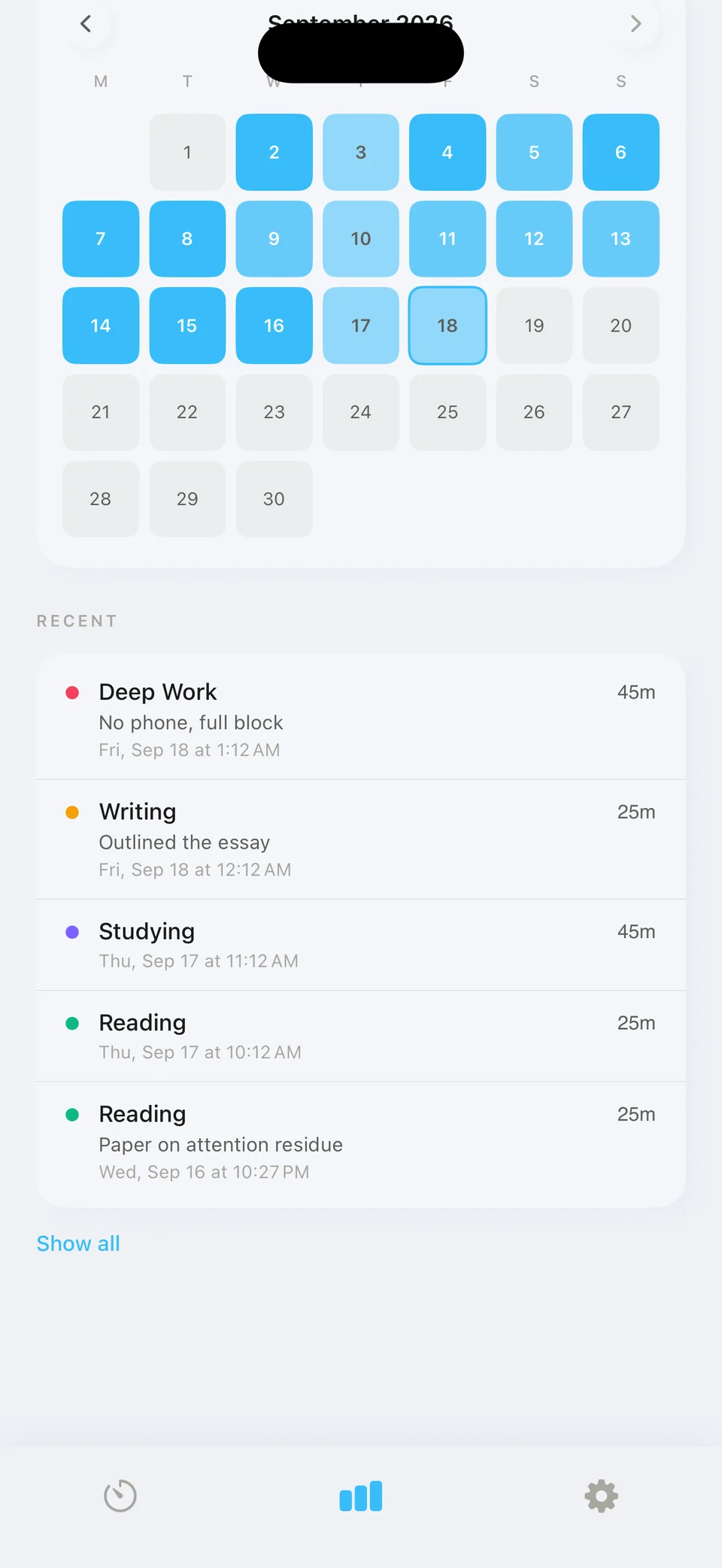
A few stable labels are easier to interpret than a new category for every session. If labelling becomes a reason to delay starting, use a simpler setup and rely on a short written note instead.
Review once, adjust once
At the next weekly review, ask what was realistic, what changed, and what the work needs now. Keep a useful slot, move an awkward one, and shrink a task that repeatedly fails to begin.
Streaks can be encouraging, but a missed day does not erase completed work. I want the history to support another session, not make an imperfect week feel unusable.
Statistics and streak tracking are Pro features. For timing choices, read my interval experiment. For the mechanics of beginning, use the first-session guide.